
The Way I See It

Sprint CEO Dan Hesse On How To Stand Out In The Workplace
Sprint CEO Dan Hesse at UT's McCombs School of Business

As Sprint Nextel CEO Dan Hesse addressed students on Sept. 27, one fact became increasingly clear: the man knows how to stand out.

Since joining Sprint five years ago, Hesse has been recognized as a wireless industry VIP by publications such as Laptop Magazine, which named him Most Influential Person in the Wireless Industry, and Fierce Wireless, which named him one of the best turn-around CEOs of all time, an honor also given to Apple’s late CEO Steve Jobs.

He spoke on campus as part of the Undergraduate Business Council’s VIP Distinguished Speaker Series.

Since taking the helm at the end of 2007, Hesse has increased Sprint’s stock value by 140 percent, leading the company that he claims was just months away from bankruptcy to become the number one company in customer satisfaction.

Hesse shared his advice on how to stand out in the workplace:

1. Work hard

“In business, in school, in athletics, the person that usually wins and achieves is the person that worked and trained the hardest.”

2. Communicate well

“Communication skills are crucial. What got me noticed at AT&T in the early days…was my ability to write well and clearly. And, of course, being able to speak well. Communication skills are very important.”

3. Be a team player

“One of the reasons I got promoted so much is because the peers of my boss had heard about me and how much their people liked working with me, and I always tried to work hard with my peers. I think peer support meant a lot. A lot of the people that worked for me later in my career were people who were at one time peers.”

4. Accept that you might fail

“You have to be okay with failing from time to time. You have to work and make sure that as CEO you’re doing everything possible to make [an idea] successful, but you have to also know when it isn’t going to work and pull the plug.”

5. Be optimistic

“I look for a really positive and optimistic attitude. [People that stand out] look at the bright side and they can go get it done. As Dwight Eisenhower said, ‘A pessimist never won any awards.’ Right away, I can feel who has that and who doesn’t.”

6. Avoid arrogance

“For our interviewers and for me, what you want to avoid more than anything else is arrogance. That won’t fit inside the company or the corporate culture. A lot of students have to figure out that balance between telling your story and making sure we know how good you are without crossing that median, if you will, that goes into arrogance or pompousness.”

7. Do the right thing

“There are a lot of things that we say make us the good guy. At every meeting, for every decision, the last question is, ‘Are we doing the right thing?’ I think it matters to our employees and our customers because it’s good business…. it really is up to businesses and business leaders more than ever to do the right thing.”
Reposted from McCombs Today

Smart Meters, Smarter Consumers

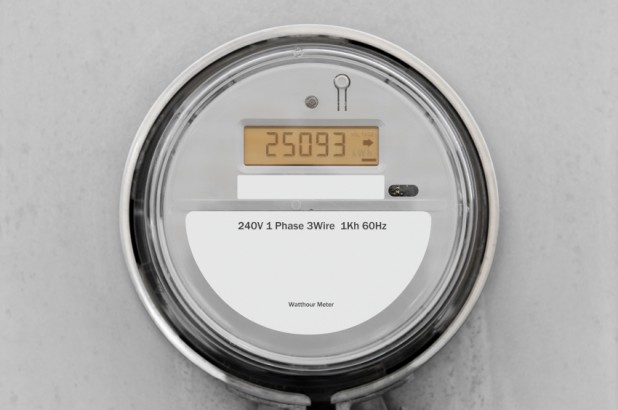
Smart MeterToday’s world is a wireless one. Radios, cell phones, laptops, even baby monitors are connected through wireless networks. In July 2006, the California Public Utilities Commission approved energy provider Pacific Gas &Electric’s plan to utilize these pre-existing wireless channels to transmit information to and from smart meters — those instruments that record residential power usage and report the data back to the energy company for analysis. One benefit of using smart meters is the ability to control energy usage, thus minimizing the risk of rolling brownouts or blackouts that leave customers in the dark. Six years later, more than nine million Californians have seen the metaphorical (and physical) light and switched to smart meter technology. These customers are making economically and environmentally conscious decisions regarding their gas and electricity consumption.

A smart meter lets consumers access their personal usage reports at any point in the month and save money by making the appropriate adjustments. Reports are available online and can even be sent directly to the user’s cell phone, allowing the customer to be informed from anywhere and make any changes remotely. Lowering power usage during peak hours can alter overall energy rates and drastically decrease the amount of energy used each month, saving money as well as energy resources.

The energy company receives the reports via secure wireless radio frequencies, and uses the information to determine trends in the area and effectively manage renewable energy resources accordingly.  They use this knowledge to avoid large-scale losses of power. In the event of a power outage, the reports help energy providers restore electricity to specific homes faster.

Launched nationwide last fall, Green Button Connect provides a way for customers to easily and securely download their energy data and send it to a third party app developer or use the data themselves to track their usage.  PG&E is now testing Green Button Connect and offering a simple, one-time authorization to automate the secure hand-off of the customer’s energy data to the third-party app developer of their choosing in about a minute.

California residents have the ability to opt-out of smart metering technology in favor of an older analog system. However, opting-out includes a monthly charge set by the California Public Utilities Commission to cover the costs of manual meter reading. Alternatively, customers that upgrade to smart meter technology will see no set-up fees or additional monthly charges.

The Edison Foundation Institute for Electric Efficiency has predicted that more than half of U.S. homes will use smart meters by 2015. More and more Californians are making the switch from analog to smart technology, and those that don’t risk being left in the dark.

Reposted from Energy Viewpoints